Using this guide, hobbyists and practising engineers can easily choose the right toggle switch for their applications.
What is a Toggle switch?
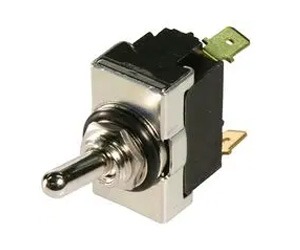
A toggle switch is a manually operated mechanical switch. It is controlled by a toggle lever that moves up and down or left or right to connect or disconnect an electrical circuit. Toggle switches are of two basic types: maintained and momentary. A maintained toggle switch changes its state to ON or OFF when actuated and retains that state until actuated again, for example, the switch of your study lamp. A momentary toggle switch actuates only when pressed and deactivates upon release, for example, the switch of your doorbell. Toggle switches are used in a wide variety of applications, including aerospace, automotive, consumer electronics, industrial automation, machinery, etc., and are available in different sizes and specifications.
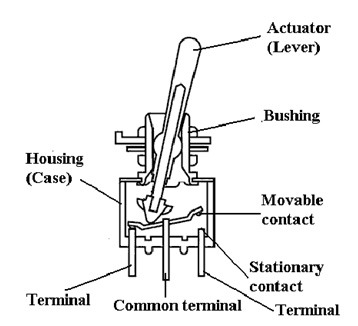
Figure 1: A toggle switch (Image source: TE Connectivity)
What are the components of a toggle switch?
A toggle switch consists of the following key components:
- Lever: When moved, the lever causes the contacts inside the switch to turn the circuit ON or OFF. Levers are generally made of resin or metal.
- Plunger: It is a resin component attached to the bottom of the lever. It is designed to always be in contact with the movable contact and restrict the lever's movement range.
- Housing(case): It supports the lever through the hole on the upper surface and protects the switch's internal components.
- O-ring: These O-shaped rubber parts are present at the base of the actuator shaft and prevent moisture and dust from entering the switch.
- Contacts: There are two contacts present in a toggle switch: the fixed contact and the movable contact. The fixed contact remains fixed to the switch's housing, and the movable contact moves when the lever is moved. When the movable contact touches the fixed contact, the current starts flowing in the circuit. Similarly, when the movable contact moves away from the fixed contact, the circuit is broken.
- Terminals: These are the points where the wires are connected to the switch. They are generally located at the bottom or side of the switch and provide a secure connection between the switch and the circuit.
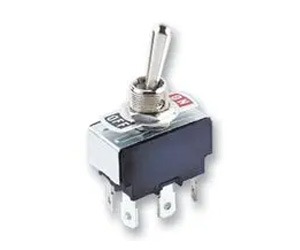
Figure 2: Components of a toggle switch (Image source: NKK SWITCHES)
Where are toggle switches used?
Toggle switches are used in a variety of applications across different industries due to their versatility and simplicity. Some typical applications are:
- Household and domestic applications: They are used to operate lamps, fans, kitchen appliances, washing machines, heaters, audio systems, televisions, etc.
- Commercial and industrial applications: They are present in control panels, testing and measurement instruments, network switches, power tools, etc.
- Automotive and defence applications: In automobiles, they control exterior and interior lights, windshield wipers, sunroofs, air-conditioners, etc. In the defence sector, they are used in aircraft control panels, communication equipment, engine control, etc.
- Medical application: Toggle switches are also used in medical devices, such as wheelchairs, hospital beds, and diagnostic equipment, such as BP monitors, ECG machines, etc.
How are toggle switches classified by operating characteristics?
Toggle switches operate in different ways. The following are the most common types:
- On-Off toggle switch: This is the most common type of toggle switch. It has two positions: ON and OFF. When the toggle lever is moved to the ON position, the circuit is closed, and the current starts flowing through it. When the toggle lever is moved to OFF, the circuit opens, and the current starts flowing through it.
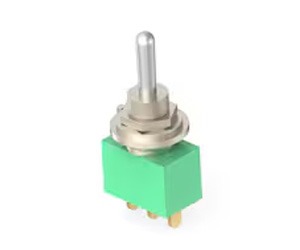
Figure 3: On-Off toggle switch (Image source: Multicomp Pro)
- On-On toggle switch: An on-on toggle switch has two positions, similar to an on-off toggle switch, but both positions are "On". Depending on the position of the switch, it can connect two different circuits. The most common example of this switch is your vehicle's dipper switch, which allows you to switch between high and low (or vice versa) beams. There are also "on-on-on", which has three positions and operates similar to an on-on toggle switch.
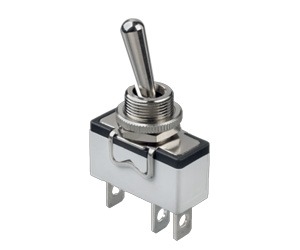
Figure 4: On-On toggle switch (Image source: TE Connectivity)
- On-Off-On toggle switch: An ON-OFF-ON operates similarly to an ON-OFF switch. It has three positions: ON, then OFF, and again ON. The first ON position closes a circuit and allows the current to flow. In the Off or centre position, it disconnects the circuit, completely stopping the flow of current. The third position is again the ON position, but here, a different circuit is connected than the first ON position. A typical example of these switches is your motorbike's Turn lamp indicator switch.
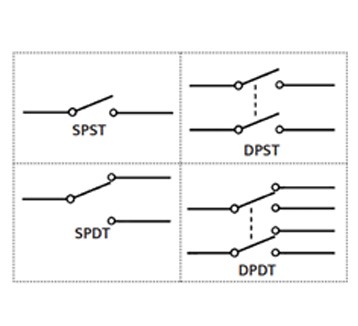
Figure 4: On-Off-On toggle switch (Image source: APEM)
What are the poles and throws of a switch?
Poles and throws refer to the capabilities of a switch. The number of poles indicates the number of movable contacts of a switch. The throw of a switch signifies the total number of different circuits each movable contact can control. The following are types of toggle switches based on different combinations of poles and throws:
- Single pole single throw (SPST): This is a basic ON/OFF switch with one input terminal and one output terminal. In the ON position, the switch allows current flow from the pole to the accessory. In the OFF position, the switch interrupts the current flow to the accessory.
- Single pole double throw (SPDT): This ON/OFF switch contains three terminals: one for input and two for output. It switches the input between two output options, making it useful for switching between two different circuits. For example, suppose you want to operate a lamp with two different bulbs: red and green. You can use an SPDT switch to choose which bulb is lit. The common terminal would connect to the power source, and the other two would connect to the red and green bulbs, respectively.
- Double pole single throw (DPST): This dual on/off switch contains two input and two output terminals and behaves like two separate SPST switches operating in synchronization. In the OFF position, both switches are open, and no connections are made. In the ON position, both switches are closed, and the connections are made between each input contact and its corresponding output contact. DPST switches are often used in applications where it is essential to disconnect both the live and neutral wires of a circuit for safety reasons, such as electric ovens or water heaters.
- Double pole double throw (DPST): This dual ON/OFF switch contains two input and four output terminals and behaves like two separate SPDT switches operating in synchronization. In one position, two input contacts are connected to one set of output contacts. In the other position, two input contacts are connected to the other output contacts. A common application of a DPDT switch is reversing the direction of a DC motor by connecting the motor to a positive voltage to turn one way and a negative voltage to turn the other way.

Figure 5: Different combinations of poles and throws of a toggle switch (Image source: SIEMENS)
Frequently Asked questions (FAQs) on toggle switches
Q: What are illuminated toggle switches?
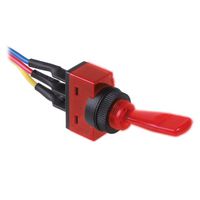
A: An illuminated toggle switch with an inbuilt pilot lamp indicates the switch's status. This helps the user see whether the switch is on or off from a distance. Illuminated toggle switches are popular in automation applications, consumer electronics, home appliances, medical equipment, telecommunication, and transportation. An example of this is the power button of your computer or television.
Q: What are the different mounting options available for a toggle switch?
A: Toggle switches have different mounting options for printed circuit boards and control panels, such as Hole, surface, PCB, and panel mount. Also, they are available with different terminal connections like solder terminals, screw terminals, and quick connect options for easier installation.
Q: My room has two entrances, and only one lamp assembly is mounted in the middle ceiling. At each entrance, an SPDT is present. How can I design a circuit to turn ON/OFF the ceiling lamp with either of these two switches?
A: To operate this ceiling lamp, connect the output of each toggle switch to the two side of the lamp as shown in figure below.
Q: Can I Use an AC Toggle Switch in DC applications?
A: No, AC toggle switches are not suitable for DC applications due to the higher risk of arcing.
Q: Where can I buy toggle switches at the best price?
A: Farnell Electronics offers a comprehensive range of toggle switches tailored for automotive, consumer electronics, and industrial applications at the best price from leading suppliers. The product line includes illuminated and non-illuminated toggle switches with different mounting and terminal options.




Technologies





Artificial Intelligence
One of the greatest revolutions in all of human history! AI is an all-encompassing concept that incorporates human intelligence into machines
DEVKIT HQ
The #1 Destination for Embedded Evaluation Boards, Development Kits, and Tools
IoT Sensor to Cloud Platform
/IOTCONNECT™ accelerate your loT journey with secure, ready-to-use cloud connectivity
Further Resources
Calculators & Conversion Charts
Selection Guides and Catalogues
Essential Learning Modules
Tech Spotlights
Design Resources
Engineering Glossary
Technical Support
Parts Finder Tools
