These sudden and excessive voltage spikes associated with these surges can cause severe and irreparable damage to delicate electronic devices, leading to costly repairs, operational downtime, and potential safety hazards.
As a design engineer, it is essential to incorporate effective surge protection techniques and technologies into your electronic systems. Doing so will significantly enhance your designs' reliability, longevity, and overall performance, safeguarding them from the catastrophic effects of transient overvoltage events. This article explores various surge protection techniques and technologies, equipping you with the knowledge and tools necessary to ensure the robustness and resilience of your electronic systems against electrical surges.
What is a surge, and what are the sources of the surge?
A surge, or transient voltage surge, is a temporary rise in voltage and current in an electrical circuit. These increases can range from a few to several thousand volts, with current spikes often exceeding a hundred amperes. Surges typically last from a few microseconds to a few milliseconds. These sudden spikes can result from various causes, including lightning strikes, power company supply issues, or when devices suddenly stop drawing power, redirecting excess voltage to other appliances. The impacts of these surges can be significant, leading to equipment failure, data loss, and operational downtime. Power surges can originate from either internal or external sources.
| Internal sources | External sources |
|---|---|
| The switching of high-current loads. | Lightning hits power lines, inducing currents in buildings. |
| Capacitor bank switching events. | Grid and capacitor bank switching (utility end) |
| Resonance circuits associated with switching devices like thyristors. | Damage to power lines or transformers |
| Faults, such as short circuits and arcing to ground. | |
| Fridge cycling in residential settings. |
Table 1: Sources of surges (Source)
Types of surge protection techniques
Surge protection can be implemented using internal PCB components or external pre-packaged modules. External modules are more common for devices that connect directly to mains, as those components tend to be too large for PCB integration. However, onboard components should still be used in targeted locations, even when an external component is required, to protect the system from transient events. Some of the most important and popular techniques are:
- Surge Protective Devices (SPDs)
- Metal Oxide Varistors (MOVs)
- Transient Voltage Suppression Diodes (TVS Diodes)
- Gas Discharge Tubes (GDTs)
- Thyristor surge suppressor (TSS)

Figure 1: SPD is installed in parallel in a network (Source)
Surge Protective Devices (SPDs):
All electronic equipment operates within a specific power range. Excessive voltage can cause permanent damage, making SPDs essential. SPDs cannot prevent voltage surges entirely, but they mitigate their effects by creating a low-resistance path that converts the transient voltage into a current and directs it to the ground. When installed within the consumer unit, SPDs act as a frontline defence by redirecting excess voltage away from vulnerable equipment, thus preventing potential damage. They are designed to sacrificially absorb harmful voltage spikes, prioritizing the protection of the electrical system even in critical situations. It's crucial to ensure that the design is safe so that in rare cases of SPD failure, it won't disrupt processes by triggering circuit breakers, fusing upstream, harming nearby equipment, or endangering people with smoke.
Types of Surge Protection Devices
Type 1 SPD Type 2 SPD Type 3 SPD

Type 1 SPD
- Positioned at the line side of the main service entrance/ main distribution board or power supply source.
- Used in large facilities and high-threat locations.
- With a 10/350 µs current wave, it's perfect for outdoor use.
- Maximum Discharge Current is 50 kA, and Voltage Protection Level Rating is ≤ 2.5 kV.
- Offers primary defense against external power surges caused by lightning or utility capacitor bank switching.
- - Equipped with built-in alarm systems to indicate replacement based on its life cycle.
Type 2 SPD
- Positioned on the load side of the main service entrance or Sub-distribution panel or electrical panel.
- Used in facilities of medium size.
- Features an 8/20 µs current wave.
- Maximum Discharge Current is 40 kA, and Voltage Protection Level Rating is ≤ 1.5 kV.
- Safeguards branch circuits or service entrances against residual lightning energy and motor-induced surges.
- Primary function is to limit transient voltage, protecting sensitive electronics and Microprocessor/microcontroller-based boards.
- Commonly used in commercial and industrial settings.
Type 3 SPD
- Positioned on the outlets or near the specific terminal equipment.
- Used in certain devices and circuits.
- Designed to withstand voltage waves (1.2/50 µs) and current waves (8/20 µs).
- Maximum Discharge Current is 10 kA, and Voltage Protection Level Rating is ≤ 1 kV.
- Designed to mitigate low-level surges that pose a risk to sensitive electronic circuits in devices like TVs, PCs, and appliances.
- Functions as the final line of defense in a surge protective network.
- Often integrated into power strips for convenient use in residential and office environments.

Figure 2: Construction of MOVs (Source)
Metal Oxide Varistors (MOVs):
The MOV is a type of non-ohmic variable resistor and has a non-linear voltage-current characteristic. Unlike ohmic resistors, such as potentiometers, the MOV's resistance changes automatically with voltage. Under normal conditions, when voltage remains within rated limits, the MOV exhibits high resistance, allowing current to flow through the circuit and bypass the MOV. However, during voltage spikes, particularly from the primary power source, the voltage is directly applied across the MOV since it is connected in parallel to the AC mains. This surge causes the MOV's resistance to plummet very low, effectively simulating a short circuit. While MOVs are effective against short surges but unsuitable for prolonged surges.
Composed primarily of zinc oxide and other metal oxides like cobalt and manganese, the MOV is structured with these oxides embedded in ceramic powders between metal electrodes. This setup forms diode junctions between adjacent oxide grains, effectively creating a network of series-linked diodes within the MOV.
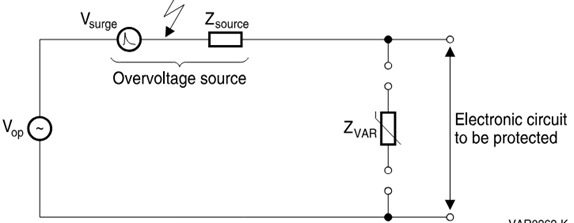
Figure 3: Triboelectric charging (Source)

Figure 4: Block diagram of TVS diode operation (Source)
Transient Voltage Suppression Diodes (TVS Diodes):
A Transient Voltage Suppressor (TVS) is an avalanche diode designed to clamp overvoltage and dissipate high transient power surges. It absorbs excess energy when the induced voltage exceeds its avalanche breakdown voltage and then automatically resets after the overvoltage condition passes. The TVS diode is a p-n semiconductor junction that becomes conductive during a transient voltage spike. Under normal conditions, it has high impedance and very low leakage current, effectively acting like an open circuit. When the voltage exceeds its threshold, the avalanche effect in the semiconductor activates, causing the p-n junction to conduct and create a low-impedance path that diverts excessive current away from the protected device.
TVS diodes respond extremely quickly, often in picoseconds, making them effective at diverting intense ESD pulses, even those with fast rise times. Compared to Metal-Oxide Varistors (MOVs), TVS diodes offer several advantages, such as the absence of aging effects, ensuring stability and reliability over time. They are more robust and of higher quality than Zener diodes, rated for low DC and not specified for handling surges.

Figure 5: TVS Diode I/V Curve (Source)

Figure 7: Configuration of GTDs (Source)
Gas Discharge Tubes (GDTs):
These surge protection devices use gas discharge principles to conduct surge currents. Initially, GDTs have a high impedance and small capacitance, functioning as an open circuit. When a surge overvoltage reaches the GDT's pulse breakdown voltage, the electric field strength exceeds the gas's breakdown strength, causing ionization and changing the GDT from an open to a closed state. This allows the surge current to discharge to the ground, protecting subsequent circuit components safely.
GDTs act like voltage-controlled switches. When the overvoltage surpasses the GDT's spark over voltage, a controlled discharge occurs, ionizing the gas and generating an arc. This arc efficiently dissipates the surge energy, maintaining a low arc voltage (approximately 20 to 40V) and preventing further overvoltage buildup. After the surge, the arc extinguishes, and the GDT's internal resistance rapidly increases to over 1000MΩ, restoring its initial high-impedance state.

Figure 8: Operating regimes (Source)
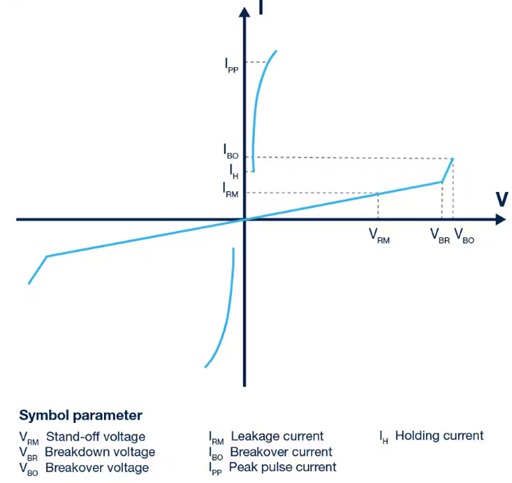
Figure 9: I/V Curve for TSS (Source)
Thyristor Surge Suppressor (TSS):
These overvoltage protection devices based on thyristor principles. They use the breakdown current of a PN structure to trigger conduction and discharge, allowing them to handle large surge pulse currents. When the voltage across a TSS exceeds its breakdown voltage, it short-circuits to maintain low impedance. The TSS reverts to a high-impedance state once the current drops below the holding current. Compared to similarly-sized TVS devices, TSS can tolerate larger surge pulse currents and have lower capacitance, making them suitable for higher surge protection in signal lines.
TSS devices switch from a high-impedance (blocked) state to a low-impedance (conducting) state during transient overloads, protecting circuits against high overload currents and preventing overvoltage damage to circuit terminals. TSS offers several advantages over traditional Gas Discharge Tubes (GDTs), including long-term stability, no aging effects, and turn-on without parasitic oscillation or ringing. They are ideal for telecom network applications such as xDSL, T1/E1, Ethernet, EPON, GPON, and voice band protection in line cards and telephony equipment in infrastructure and residential installations.

Figure 10: Inductive transients in a partially protected LAN (Source)
Applying surge protection to a local area network
Surge protection devices (SPDs) can only be effective when installed correctly. This section provides guidelines for networks where LAN cables run between buildings with structural lightning protection or negligible risk of direct strikes.
- LAN cable routing: Run the cables passing between buildings close to the mains power distribution boards, from which each building's electrical supply earth originates.
- Network SPD installation: Install a network SPD in the LAN cable near the mains power distribution board in each building. Treat all buildings similarly, as the concern is potential differences between their earth grounds.
- SPD earthing: Earth the SPD at the mains power distribution board using the shortest possible cable with a minimum cross-section of 2.5mm². For better performance, use several cables electrically paralleled and spaced apart. Ideally, mount the SPD on earthed metal panels, if available.
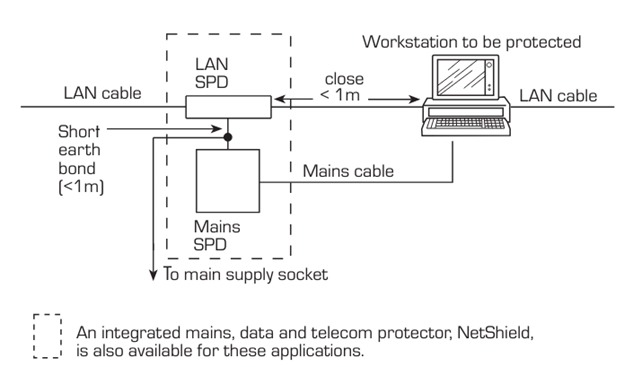
Figure 11: Use of SPDs to protect individual items of LAN equipment (Source)
As a global distributor, we proudly partner with top suppliers to offer an extensive range of products, including advanced surge protection solutions
| Products | Buy link |
|---|---|
| Coaxial Surge Protectors | Buy now |
| Data & Signal Line Protectors | Buy now |
| Ethernet & POE Surge Protectors | Buy now |
| Mains Surge Protectors | Buy now |
| Line Reactors | Buy now |
| Line Conditioners | Buy now |
| Power Outlet Strips - with Surge Protection | Buy now |
| LED Shunt Protectors | Buy now |
| TVS Thyristors | Buy now |
Conclusion
Surge protection is essential in the industry to safeguard valuable electronic devices from potential damage caused by voltage spikes. With various options available, from basic power strips to comprehensive whole-house surge protectors, assessing individual needs and budgetary constraints is crucial when selecting the appropriate solution. Specific devices like computers and home entertainment systems demand more advanced surge protection measures, including battery backup capabilities. Moreover, regular maintenance and timely replacement of surge protectors are necessary to ensure their continued effectiveness in mitigating the detrimental effects of transient over voltages. Surge protection represents a prudent investment for any industry, offering peace of mind and substantial cost savings by protecting delicate electronics from costly repairs or replacements resulting from voltage surge damage.


Tecnologías





Inteligencia artificial
¡Una de las más grandes revoluciones en la historia de la humanidad! La inteligencia artificial es un concepto integral que incorpora la inteligencia humana a las máquinas
DEVKIT HQ
The #1 Destination for Embedded Evaluation Boards, Development Kits, and Tools
IoT Sensor to Cloud Platform
/IOTCONNECT™ accelerate your loT journey with secure, ready-to-use cloud connectivity
Further Resources
Calculators & Conversion Charts
Selection Guides and Catalogues
Essential Learning Modules
Tech Spotlights
Design Resources
Engineering Glossary
Technical Support
Parts Finder Tools
Recursos técnicos
Explore nuestra biblioteca cuidadosamente seleccionada de documentos técnicos, artículos técnicos, videos, módulos de capacitación, tutoriales y mucho más para ayudarle a desarrollar sus diseños, su negocio y su profesión.

La más grande comunidad online de ingenieros
CONÉCTESE | APRENDA | CREE | INSPIRE