The International Energy Agency (IEA) reports that worldwide demand for electric vehicle (EV) batteries topped 750 GWh in 2023, with commercial vehicles being a significant factor. Battery Management Systems (BMS) and Energy Storage Systems (ESS) are key to this shift, helping electric commercial vehicles perform well, safely, and reliably. This article explores the technical details of BMS and ESS, how they are used in commercial transport, and recent innovations, technical advancements, and applications.
What are BMS and ESS in commercial transportation?
A Battery Management System (BMS) is an electronic control circuit designed to monitor and regulate the charging and discharging of batteries. It manages rechargeable battery packs by tracking various battery characteristics, such as battery type, voltage, temperature, capacity, state of charge, power consumption, remaining operating time, and charging cycles. BMSs play a crucial role in commercial transportation by ensuring the safe and efficient operation of rechargeable battery packs. Its core functions include:
- State-of-Charge (SoC) and State-of-Health (SoH) estimation: Calculates SoC, SoH, and other parameters using algorithms like Kalman filters or machine learning models.
- Cell balancing: Equalizes charge across cells to maximize capacity and lifespan.
- Overcharge/discharge protection:Prevents overcharging, deep discharging, and thermal runaway.
- Communication with vehicle ECUs and telematics: Interfaces with vehicle control units (VCUs) via Controller Area Network (CAN) bus or similar protocols.
ESS is the larger infrastructure that integrates battery modules, BMS, power conversion systems, and thermal management units into a cohesive platform for storing and delivering electrical energy. In commercial transport, ESS refers to the battery packs that store electrical energy to power electric vehicles. Predominantly, these are lithium-ion batteries due to their high energy density (100–265 Wh/kg), efficiency, and declining costs. The two primary chemistries are:
- Lithium Nickel Manganese Cobalt Oxide (Li-NMC) offers high energy density (150–275 Wh/kg), ideal for long-range applications. However, because it uses cobalt, it is sensitive to temperature and less sustainable.
- Lithium Iron Phosphate (LFP): Provides lower energy density (80–150Wh/kg) but excels in safety, longevity (3000–7000 cycles), and cost-effectiveness, making it increasingly popular in commercial vehicles.
Emerging sodium-ion batteries, with energy densities of 140–160 Wh/kg and lower costs, are also gaining traction for smaller commercial applications. ESS in commercial vehicles typically ranges from 300 kWh for buses to over 850 kWh for long-haul trucks, requiring robust integration with vehicle powertrains.
The role of BMS and ESS in powering commercial EV fleets
Electrifying commercial fleets—ranging from delivery vans to Class 8 trucks (the heaviest-duty commercial vehicles, defined by a Gross Vehicle Weight Rating [GVWR] exceeding 33,000 lbs)—requires high-performance ESS and intelligent BMS for several key reasons:
- Efficiency and range optimization: Every kilowatt-hour counts, with commercial fleets often operating on tight delivery schedules and payload constraints. BMS ensures optimal energy usage through precision SoC/SoH tracking and efficient charge/discharge management. Integration with regenerative braking and dynamic route-based power prediction can further enhance range.
- Thermal safety and performance: Thermal runaway remains a significant safety hazard, especially with high-energy NMC and LFP chemistries. Advanced BMS solutions now incorporate predictive algorithms using AI/ML to forecast cell-level anomalies before catastrophic failures. Integration with liquid or phase-change-based thermal management systems ensures consistent performance across diverse climates.
- Fleet-wide monitoring and predictive maintenance: Cloud-connected BMS platforms feed real-time battery diagnostics into fleet management systems. This data enables predictive maintenance schedules, prolongs battery life, and ensures consistent Total Cost of Ownership (TCO) predictability for fleet operators.
- Integrating Commercial Battery Energy Storage Systems (BESS): Commercial BESS allows companies to store electricity from the grid or solar panels and use it during busy times, helping them save money by cutting peak demand and taking advantage of lower energy prices. With storage sizes from 500 kWh to over 2 MWh, commercial BESS can easily fit different business needs.

Figure 1: Powering fleets with BMS and ESS
BMS architecture for commercial transport applications
BMS in EVs adapt to diverse structural designs based on the distribution and connectivity of sensors and actuators. Commercial EVs typically employ large, high-voltage battery packs (600- 800V) with capacities ranging from 300-600 kWh, necessitating sophisticated BMS architectures. The most common types of BMS structures are as follows-
- Centralized architecture: In a centralized BMS, the sensors and actuators are connected to a single control unit near the battery pack. This structure is cost-effective and straightforward and is more common in smaller commercial vehicles where packaging constraints are significant.
- Distributed architecture: In a distributed BMS, sensors and actuators are integrated directly into each battery cell or module, with each unit equipped with its local monitoring unit (LMU). These LMUs, typically responsible for monitoring 12–24 cells each, communicate with a central master control unit using robust, high-bandwidth protocols like CAN-FD or specialized proprietary buses. This architecture enables precise, real-time monitoring and control and provides enhanced fault tolerance and redundancy features that are especially vital for mission-critical commercial transportation applications.
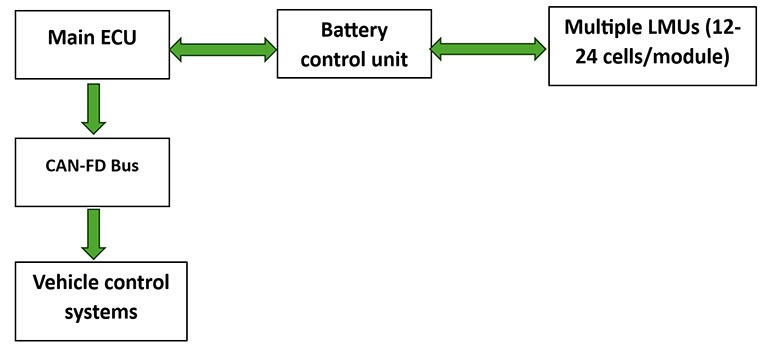
Figure 2: Block diagram of distributed architecture
Importance of BMS in ESS
The BMS is the nucleus of ESS performance, safety, and longevity in commercial electric vehicles. Its critical roles include:
- Multi-domain state estimation: Commercial transport BMS employs fusion algorithms combining multiple observation domains: the voltage domain (involving OCV-SOC relationships), the current domain (using Coulomb counting with drift compensation), the temperature domain (based on thermal models), and the impedance domain (derived from EIS parameters).
- Safety management: Continuous monitoring detects overvoltage or thermal runaway anomalies, triggering protective measures such as contactor disconnection or pyrofuse activation.
- Performance optimization: Accurate SOC and SOH estimation ensures optimal energy utilization, critical for meeting range requirements in buses (e.g., 400–500 km) and trucks (e.g., 800 km).
- Longevity enhancement: Cell balancing and thermal management maintain uniform cell conditions, extending battery life. For LFP batteries, this can exceed 7000 cycles.
- Data analytics: Advanced BMS employ data-driven electrothermal models and AI/ML for predictive maintenance, reducing downtime by anticipating issues.
For example, in electric buses with frequent charge-discharge cycles, BMS ensures safe fast charging, while in long-haul trucks, it optimizes energy efficiency for extended ranges.
ESS design considerations for commercial transport
Commercial transport ESS designs must balance energy density, power capability, and thermal management:
- High-power DC bus design: Modern commercial transport vehicles utilize DC bus voltages of 650-850V to minimize I2R losses (power lost as heat due to the resistance in electrical conductors) and enable faster charging (up to 350 kW). Commercial transport ESS increasingly employs SiC MOSFETs with breakdown voltages >1200V, switching frequencies of 50-100 kHz, and junction temperatures up to 175°C. These reduce switching losses by 60-80% compared to IGBTs. The ESS also integrates Low-inductance bus bars (<10 nH) with integrated cooling channels to manage high-current transients while minimizing EMI and voltage spikes during switching events.
- Thermal management strategies: Advanced ESS designs implement direct liquid cooling using dielectric fluids that contact cell surfaces directly, maintaining thermal gradients of less than 5°C across large battery packs even during high-power operations. Many systems now integrate encapsulated phase change materials (PCMs) with melting points between 35–45°C to enhance thermal stability further, providing transient thermal buffering during peak power events. Building on these hardware innovations, machine learning algorithms analyze route data, ambient conditions, and load profiles to preemptively adjust cooling capacity, resulting in a 15–20% reduction in energy consumption compared to traditional reactive thermal management approaches.
- Advanced cell monitoring techniques: Commercial transport BMS platforms employ advanced cell monitoring techniques beyond traditional voltage and temperature tracking. Dynamic impedance spectroscopy injects small AC signals across multiple frequencies (typically 10 Hz to 5 kHz) in real time to measure cell impedance, enabling detection of internal degradation mechanisms. Additionally, synchronized sampling using high-precision ADCs (±5 μs synchronization across modules) identifies transient imbalances during high-current events, such as regenerative braking, which can exceed 300 kW. To increase accuracy, multi-domain state estimation combines insights from voltage (OCV-SOC correlation), current (Coulomb counting with drift correction), temperature (thermal modeling), and impedance (EIS-derived parameters), offering a comprehensive, data-driven picture of battery health and performance.
- Modular and scalable pack architecture: Commercial transport ESS must be modular and scalable to accommodate varying energy needs across vehicle classes, from urban delivery vans to Class 8 trucks. A modular design enables capacity scaling, simplifies maintenance with hot-swappable units, enhances redundancy, and facilitates fault isolation. It also supports regulatory compliance and allows future upgrades, such as integrating new chemistries, without redesigning the entire system.
- Safety and compliance with functional standards: Commercial ESS must meet stringent safety standards like ISO 26262 (ASIL C/D) and battery certifications such as UN 38.3, UL 2580, and IEC 62619. IP67/IP69K-rated enclosures, shock/vibration resistance, and EMI/EMC compliance are essential for durability and signal integrity. Safety features like fire barriers, pressure relief vents, and active isolation switching ensure robust protection for systems and personnel.
Technological advancements shaping the future
Recent advancements in BMS and ESS are significantly enhancing their applicability in commercial transport:
- Advanced BMS algorithms: The evolution of AI in embedded systems has enabled intelligent BMS that self-learn battery behavior under real-world conditions. These data-driven algorithms support adaptive State of Health (SoH) estimation, real-time anomaly detection, and accurate Remaining Useful Life (RUL) prediction.
- Battery Chemistry improvements: Battery chemistry is progressing rapidly. In 2023, LFP batteries captured 41% of the 2023 market thanks to their safety and affordability, and sodium-ion batteries emerged as a cost-effective, mineral-free alternative. At the same time, commercial transport energy storage systems are increasingly integrating second-life EV batteries, promoting a circular battery economy and delivering affordable grid support solutions.
- Modular ESS design: To accommodate different commercial vehicle categories (e.g., transit buses vs. long-haul trucks), ESS modules are now built with a Lego-like architecture—stackable, thermally insulated, and hot-swappable. This modularity aids scalability, serviceability, and inventory management.
Modern BMS designs also enable high-power fast charging, significantly reducing vehicle downtime in commercial transport.
| Chemistry | Energy Density (Wh/kg) | Price ($/kWh) | Cycles | Safety |
|---|---|---|---|---|
| Li-NMC | 150–275 | 130–139 | 1500–5000 | Moderate |
| LFP | 80–150 | 70–105 | 3000–7000 | High |
| Sodium-ion | 140–160 | 80–120 | 4000–5000 | High |
Table 1: Comparison of Battery Chemistries for commercial EVs
Applications across the commercial transport ecosystem
- Urban buses: High-frequency stop-start cycles benefit from robust BMS that integrates seamlessly with regenerative braking systems.
- Electric delivery vans: Require lightweight, compact ESS for last-mile optimization.
- Long-haul freight trucks Demand ESS with high energy density, thermal durability, and long cycle life for sustained range and uptime.
| Transport segment | BMS focus areas | ESS requirements | Key performance |
|---|---|---|---|
| Urban delivery vans | Frequent start-stop cycles.Regenerative braking optimization.SOC accuracy in variable routes | 100-150 kWh capacity.High power density.Fast opportunity charging | Energy consumption: 0.8-1.2 kWh/km.150-200 km daily range.50-150 kW peak power |
| City transit buses | Predictable route profiles.High daily utilization (16-20 hrs).Passenger load variation | 250-350 kWh capacity. Pantograph charging. Redundant safety systems | Energy consumption: 1.2-1.8 kWh/km. Ultra-fast charging (450 kW). 10+ year service life |
| Medium duty truck | Mixed urban/highway cycles. Varying payload weights. Multi-shift operations | 200-400 kWh capacity. Flexible charging rates. Modular design | Energy consumption: 1.0-1.5 kWh/km. 200-300 km range. 200-250 kW peak power |
| Long-Haul trucks | Extended high-power output. Highway efficiency optimization. Long service intervals | 600-1000 kWh capacity. High energy density. Megawatt charging capability | Energy consumption: 1.5-2.2 kWh/km. 400-800 km range. 350-850 kW charging |
Conclusion
BMS and ESS technologies have emerged as the cornerstone of commercial transport electrification. These systems provide the essential intelligence and power management infrastructure driving this transition. Through advanced cell monitoring, multi-domain state estimation algorithms, and predictive analytics, these systems deliver the reliability and performance demanded by commercial applications. As the industry evolves, these technologies extend beyond vehicle management to enable vehicle-grid integration and support fleet-wide optimization. For engineers and operators navigating this transition, mastering BMS and ESS integration isn't just about technical excellence—it's about building the foundation for a sustainable transport ecosystem that meets tomorrow's operational, economic, and environmental imperatives.









Inteligencia artificial
¡Una de las más grandes revoluciones en la historia de la humanidad! La inteligencia artificial es un concepto integral que incorpora la inteligencia humana a las máquinas
DEVKIT HQ
The #1 Destination for Embedded Evaluation Boards, Development Kits, and Tools
Recursos técnicos
Explore nuestra biblioteca cuidadosamente seleccionada de documentos técnicos, artículos técnicos, videos, módulos de capacitación, tutoriales y mucho más para ayudarle a desarrollar sus diseños, su negocio y su profesión.
Tecnologías





Further Resources
Calculators & Conversion Charts
Selection Guides and Catalogues
Essential Learning Modules
Tech Spotlights
Design Resources
Engineering Glossary
Technical Support
Parts Finder Tools
