In the future, the way to manage traffic congestion would be by an intelligent analysis of traffic data.
Machine learning (ML) is a data-driven solution that can take up this challenge by learning to extract patterns out of historical data subsequently to automate a system. Intelligent transportation System (ITS) uses ML to improve the transportation system’s safety, efficiency, and comfort.
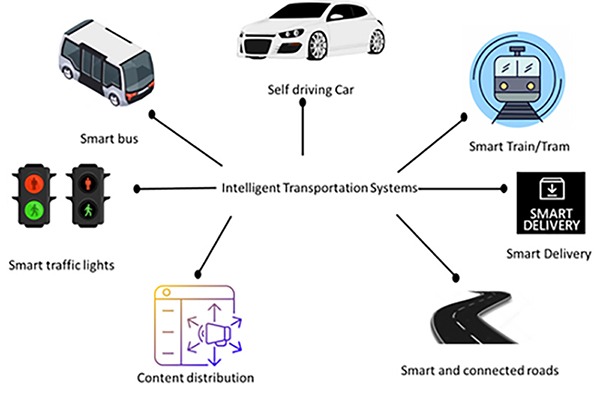
Figure 1: Intelligent transportation
Why Intelligent Transportation:
- Traffic safety:
Artificial intelligence (AI), in conjunction with the Internet of Things (IoT), can help governments enforce traffic management and reduce vehicle violations.
- Road condition analysis:
Traffic analysis involves extensive analysis of data extracted from public transportation, cars, and pedestrians. The data is then streamed into mobile phones allowing drivers to plan their routes.
- Technology law enforcement:
AI image recognition enables law enforcement to reduce traffic congestion, implement illegal bans, and reduce road safety accidents. Smart bans improve law enforcement accuracy.
ML for Intelligent Transportation
Data is the primary commodity harvested from ITS. ML has the inherent ability to discover knowledge from data. ML-enabled features like regression, clustering, classification, prediction and decision-making enhance ITS and serve as the building blocks of most IT applications.
ML pipeline
Figure 2 depicts the ML pipeline. This pipeline consists of several steps, such as data preprocessing, feature extraction, and modelling. The ML pipeline aims to model ITS elements that ITS tasks can utilise. For example, modelling vehicle mobility is useful for prediction tasks and classifying transportation infrastructure models from images can be used in perception.
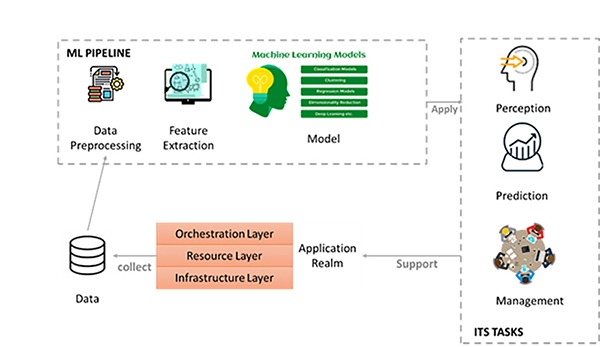
Figure 2: ML Pipeline
ML driven perception in ITS
ML-driven perception for image processing is primarily presented through a vision-based lens. Since perception tasks apply to several ITS topics and scopes, the final ITS topic must be narrowed down considering the related work, the ML approaches used, and the role played by ML. The four major tasks covered are road, vehicles, users, and networking.
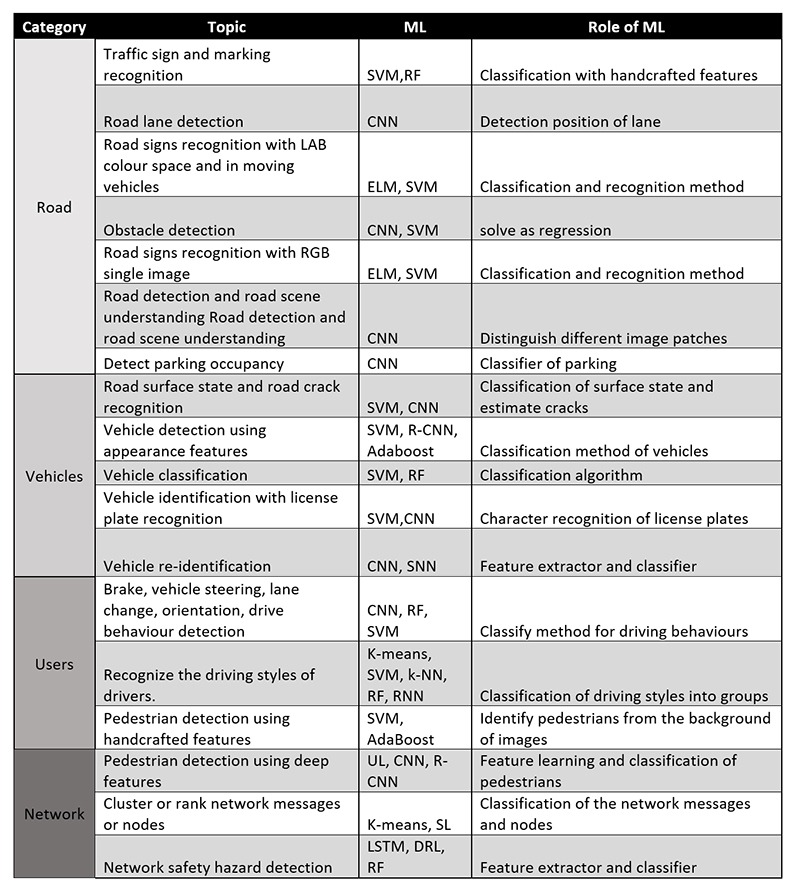
Table 1
ML driven prediction in ITS
ML approaches have achieved excellent performance on ITS prediction problems. Table 2 groups the ITS topics related to prediction tasks and also presents the ML approaches and the role of ML in each topic.
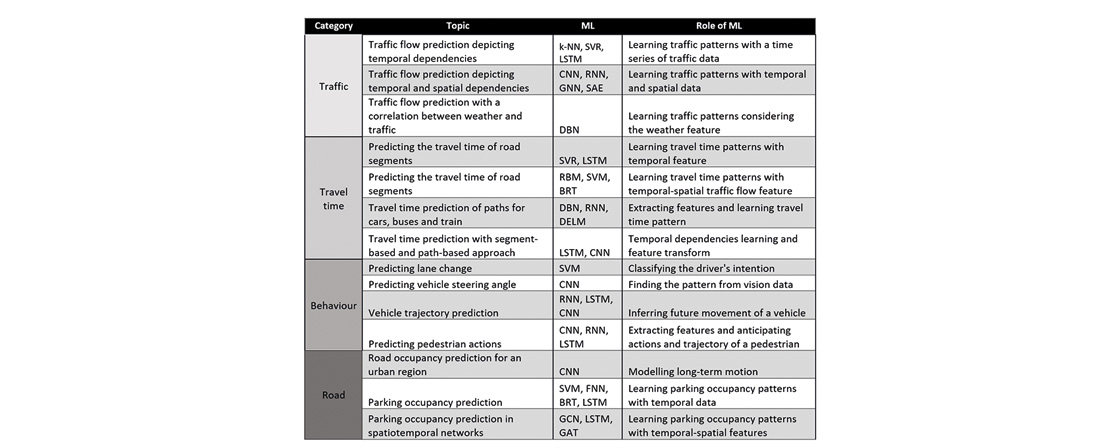
Table 2
ML driven management in ITS
This section introduces ML-driven ITS management from two perspectives: ITS infrastructure and resource management. Table 3 displays the related work.
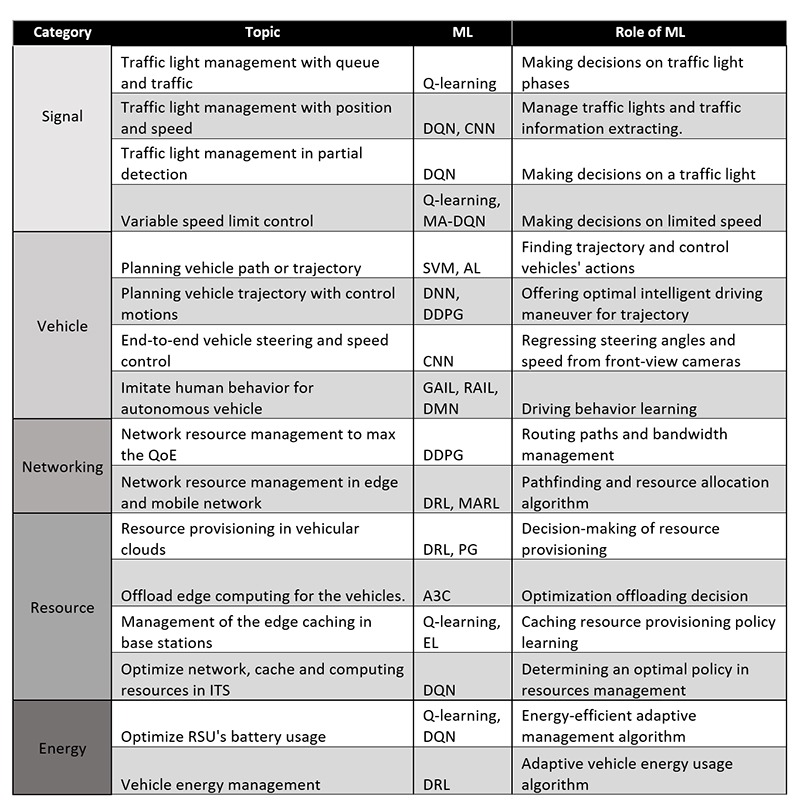
Table 3
Conclusion
ITS combines rapidly evolving technologies into various platforms for a wide range of advanced applications. The timely acquisition, processing, and analysis of large volumes of data have become an essential cornerstone for several applications' effective deployment and run-time operation. Advances in ML are thus critical enabling technologies for driving an ITS revolution.


Inteligencia artificial
¡Una de las más grandes revoluciones en la historia de la humanidad! La inteligencia artificial es un concepto integral que incorpora la inteligencia humana a las máquinas
DEVKIT HQ
The #1 Destination for Embedded Evaluation Boards, Development Kits, and Tools
Recursos técnicos
Explore nuestra biblioteca cuidadosamente seleccionada de documentos técnicos, artículos técnicos, videos, módulos de capacitación, tutoriales y mucho más para ayudarle a desarrollar sus diseños, su negocio y su profesión.
Tecnologías





Further Resources
Calculators & Conversion Charts
Selection Guides and Catalogues
Essential Learning Modules
Tech Spotlights
Design Resources
Engineering Glossary
Technical Support
Parts Finder Tools
