Proximity sensors, such as ultrasonic sensors, capacitive sensors, magnetic sensors, optical sensors, and inductive sensors, play a vital role in identifying the presence or absence of objects in dynamic environments. This article explores types, principles, and techniques used in proximity sensors for industrial applications.
What are proximity sensors?
A proximity sensor uses a non-contact detection method to detect the presence or absence of an object. It operates based on various principles such as high-frequency oscillation type using electromagnetic induction, magnetic type using magnetism, electrostatic capacity type, and sensing changes in the electrostatic capacity between the sensing object and the sensor. This non-contact detection method ensures that the object remains undamaged. Proximity sensors are effective even if moisture or grease are present. These sensors provide high-speed response and are suitable for precise object positioning because of their high repeatability. Their high response frequency enables stable detection, even with fast-moving objects.
Types of proximity sensors with their operating principle
- Inductive Proximity Sensor
- Capacitive proximity sensors
- Optical proximity sensors
- Magnetic proximity sensors
- Ultrasonic Proximity sensor
| Proximity sensor | Inductive proximity sensor | Capacitive proximity sensors | Optical proximity sensorsr | Magnetic proximity sensors | Ultrasonic Proximity sensor |
|---|---|---|---|---|---|
| Technology | Electromagnetic field | Electric field | Light (reflection or interruption) | Permanent magnet and reed switch | Sound waves (reflection) |
| Target Material | Metal only | Any material (metal, plastic, liquid) | Varies (reflective: any object, thru-beam: opaque object) | Ferrous metals only | Most materials (solids, liquids) |
1. Inductive proximity sensor
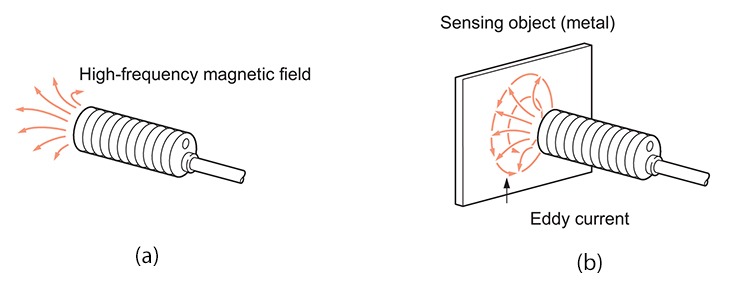
The sensor's oscillator generates a symmetrical, oscillating magnetic field that is radiated from the ferrite core and coil array near the sensing face, as shown in Figure 1. When target material that is ferrous in nature enters this magnetic field, small, independent electrical currents (eddy currents) are induced on the metal’s surface. Eddy currents incur thermal energy loss due to the metal's resistance, thus reducing the amplitude of oscillation. In Figure 2, detecting a change in the oscillation state prompts output operation.
Figure 1: (a) High-frequency magnetic field produced by the detection coil (b)The sensing object and detection coil interface produce an eddy current(Source)
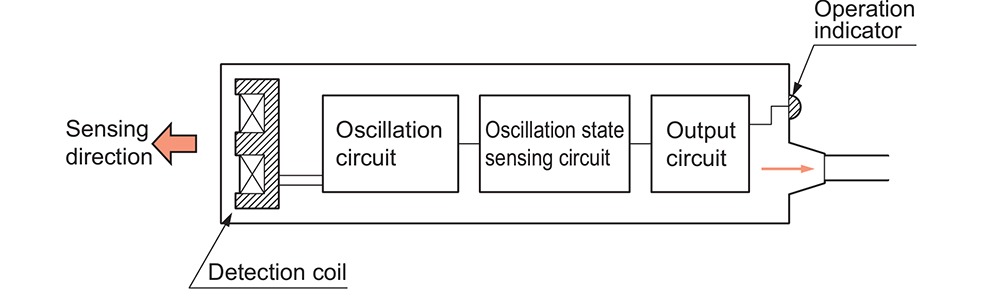
Figure 2: Induction proximity sensor internal configuration(Source)
Special features of inductive proximity sensors
- The detection principle is based on thermal loss due to induced current.
- The inductive type supports only metal detection.
- It cannot detect non-metals since current cannot flow.
- Metals such as ferrite, which do not allow current flow, cannot be detected.
- The sensing range can be improved by increasing the detection coil size, using non-shielded sensor heads, etc.,
Applications
- Machine tools
- Assembly lines
- Detection of metal parts in harsh environments
- High-speed moving parts
2. Capacitive proximity sensors
As the sensing element (metal or dielectric) approaches the electrode, the capacitance between the main electrode and ground potential increases due to the electrostatic induction effect. This change in capacitance triggers the CR oscillation circuit into motion. The approach of the sensing object is detected by observing the rise in the oscillation amplitude. For dielectric sensing objects, the variation in the capacitance between a central electrode and ground potential exceeds the large relative permittivity. The sensor detects this change. Figure 3 shows the circuit of the capacitance-based proximity sensor.
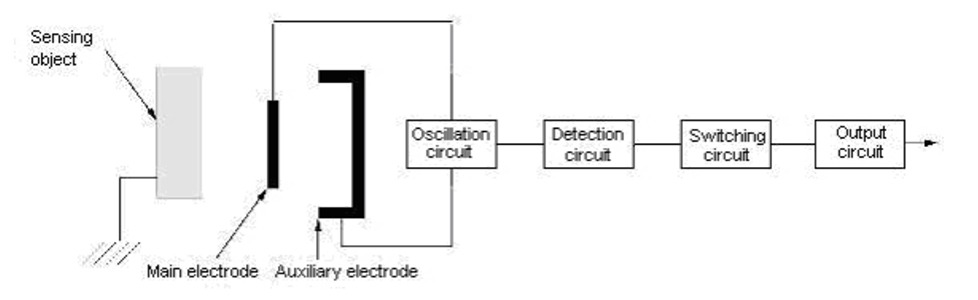
Figure 3: Capacitive proximity sensors internal configuration(Source)
Features of capacitive proximity sensors
- They are applicable irrespective of the material's conductivity (metals, minerals, wood, plastic, glass, cardboard, leather, ceramic, or fluids).
- They are generally insensitive to the color or transparency of the detected object.
- Compared to other sensing technologies, capacitive sensors are less affected by environmental factors like dust, dirt, or moisture.
- Capacitive sensors can provide fast response times and high accuracy in detecting objects.
- They are designed with stainless steel and plastic casing for required applications.
Applications
- Movement tracking,
- Displacement in mass production
- Contactless vibration measurement
- Packaging and labeling machines
- Material handling and conveyor systems.
3. Optical proximity sensors
Optical proximity sensors detect changes in light intensity or interruptions of light beams to determine the presence or absence of an object within their sensing range or even the emission and reflection of light beams by the sensor. ToF and triangulation principles are popularly used in optical sensors for industrial applications.
The optical proximity sensors convert light emission signals into electrical signals. These sensors have a source and a detector. The response of the optical receiver varies according to the wavelength. Infrared light is the preferred light source due to its high intensity and susceptibility to interference.
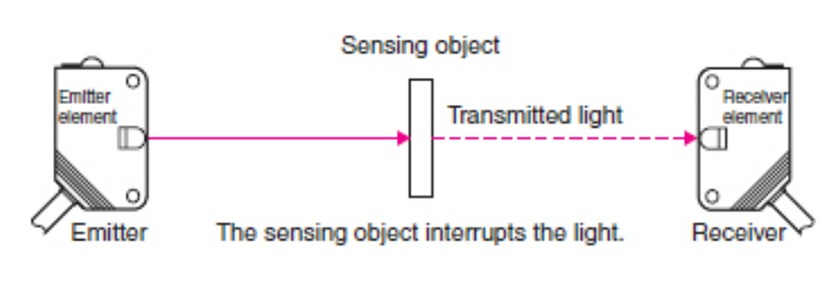
Figure 4: Operating principle of optical proximity sensors (Source)
Features of Optical proximity sensors
- They can detect objects up to a range of 10 meters.
- They can detect solid, liquid, powder, and opaque materials.
- They have a wide operating range and can detect small objects situated at a considerable distance with good positioning accuracy.
- They must be used at a sufficient operating margin and with a contamination warning signal.
- ToF sensors typically offer longer sensing ranges, and triangulation sensors provide higher resolution and accuracy.
- Optical proximity sensors are based on light-interfacing properties, such as reflective, through-beam, and diffuse sensors.
The limitations of optical proximity sensors are
- Performance can be affected by an object’s transparency, color, or surface finish, resulting in inconsistent readings.M
- Ambient light or changes in lighting conditions can interfere with the sensor’s operation, leading to error readings or reduced accuracy.M
Applications
- Barcode and QR code Reading
- Liquid level sensing
- Machine safety
- Positioning and Alignment
- Sorting and counting
4. Magnetic proximity sensors
Magnetic proximity sensors operate on several principles, such as,
Variable reluctance proximity sensors: These sensors measure the change in magnetic reluctance of a ferrous object in motion or at rest. They consist of a permanent magnet and a pickup coil.
Magneto-resistive proximity sensors: When an object with its magnetic field approaches the sensor, its electrical resistance changes. This feature helps detect the angle at which the external magnetic field (or object's position) is about the sensor.
Giant Magneto-Resistive Effect: In metallic layered systems, a significant shift in electrical resistance occurs when the magnetizations of the ferromagnetic layers are reoriented relative to one another under an external magnetic field. This phenomenon can be used to detect objects.
Reed switches consist of two ferromagnetic reeds (contact blades) that seal and are housed in a glass capsule. Magnets activate them.
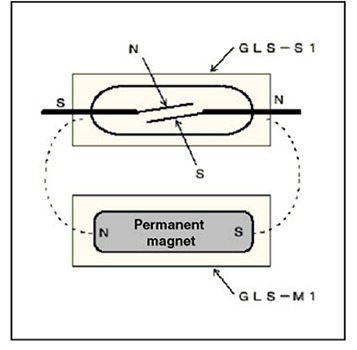
Figure 5: Working principle of reed switches(Source)
Reed contacts that detect nearby objects using magnetic field distortion is shown in Figure 5. If a ferromagnetic material enters the sensor’s range, it changes the magnetic field, initiating a signal from the sensor.
Features of magnetic proximity sensors
- Magnetic sensors can detect ferrous (iron-containing) as well as non-ferrous materials.
- They can detect magnets through non-ferrous metal, stainless steel, aluminum, plastic, or wood walls.
- Depending on the orientation of the magnetic field, the sensor is damped from the front or the side.
- Unlike optical sensors, magnetic sensors are not affected by ambient light or optical interference, making them suitable for use in environments with varying light conditions.
- Magnetic sensors are generally insensitive to the surface properties of the target object, such as color, texture, or transparency.
The limitations of magnetic field sensors are:
- The target object to be detected must be equipped with at least one magnet.
- The sensing range depends on the mounting direction of the magnet.
Applications
- Door monitoring
- Component query
- Detecting components through metal walls, provided the walls are non-magnetic.
- contactless current sensing
- Linear and angular position
- Rotation sensing
5. Ultrasonic Proximity sensors
The principle of ultrasonic detection is based on measuring the time taken between transmission of an ultrasonic wave (pressure wave) and reception of its echo (return of transmitted wave), as shown in Figure 6. Eq. 1 gives the relation to find the range of the target.
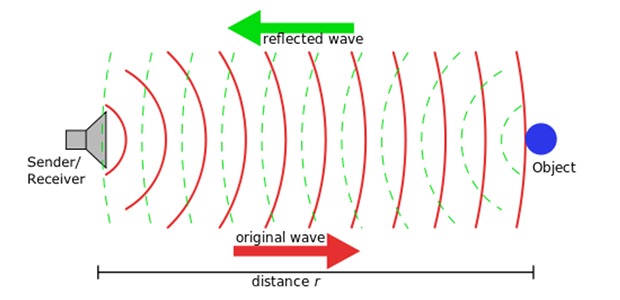
Figure 6: The working principle of ultrasonic proximity sensors(Source)

From Equation 1 ultrasonic Distance Calculation can be obtained. Where troundtrip is the total time traveled, and Vsound is the sound velocity.
Features of ultrasonic proximity sensor
- Detection is possible even for fragile, freshly painted objects, etc., as no physical contact with the object is required.
- It facilitates the detection of materials, irrespective of color, at the same distance without adjustment or correction factor.
- Minimum and maximum sensing distances should be marked for effective operation.
- It offers excellent resistance to industrial environments by encapsulated in resin.
- The sensor has no moving parts; therefore, service life is independent of the number of operating cycles.
Factors influencing the detection of objects
Ultrasonic sensors excel at detecting objects capable of reflecting acoustic waves, particularly objects having a flat surface perpendicular to the detection axis. However, the performance of the ultrasonic sensor can be impacted by:
- Air currents: These can accelerate or divert the acoustic wave transmitted by the sensor, especially when objects are propelled by air jets.
- High-temperature gradients, an object emitting considerable heat can create zones of varying temperature that will modify the propagation time of the wave and thus prevent reliable operation,
- Sound insulators: sound-absorbing materials (cotton, fabrics, rubber, etc.) can dampen the effectiveness of the sensor.
- Object orientation: The angle between the face of the object to be detected and the reference axis of the sensor is crucial. When the angle is offset from 90°, the wave is no longer reflected along the sensor axis, and the operating distance is reduced. The greater the distance between the sensor and the target, the greater the effect. Detection is not possible when the angle exceeds ± 10°.
Applications
- Level measurement
- Collision avoi dance and obstacle détection
- Fill level control in packaging
- Liquid flow measurement
- Presence detection in conveyor systems.
Conclusion
Ensuring fast and dependable object detection at high speeds is critical across various industrial and manufacturing environments. Proximity sensors play a pivotal role in meeting this demand by providing real-time detection capabilities that enable efficient and safe operation of machinery and processes. Industrial professionals can optimize sensor selection by understanding the operational principles of proximity sensor technologies and considering factors such as sensor placement and environmental conditions to meet the specific requirements of their applications.
Farnell has partnered with many different suppliers catering to a wide range of Proximity sensors:
| Product | Key suppliers | Buy link |
|---|---|---|
| Capacitive proximity sensors | TURCK, OMRON, CARLO GAVAZZI | Buy now |
| Hall Effect proximity Sensors | LITTELFUSE, MULTICOMP PRO | Buy now |
| Inductive proximity sensors | TELEMECANIQUE SENSORS, MULTICOMP, PEPPERL+FUCHS | Buy now |
| Magnetoresistive Proximity Sensors | FESTO | Buy now |
| Miscellaneous Proximity Sensors | ELMDENE, OMRON, HONEYWELL | Buy now |
| Reed Proximity Sensors | STANDEXMEDER | Buy now |
| Ultrasonic Proximity sensors | TELEMECANIQUE SENSORS | Buy now |
Inteligencia artificial
¡Una de las más grandes revoluciones en la historia de la humanidad! La inteligencia artificial es un concepto integral que incorpora la inteligencia humana a las máquinas
DEVKIT HQ
The #1 Destination for Embedded Evaluation Boards, Development Kits, and Tools
Recursos técnicos
Explore nuestra biblioteca cuidadosamente seleccionada de documentos técnicos, artículos técnicos, videos, módulos de capacitación, tutoriales y mucho más para ayudarle a desarrollar sus diseños, su negocio y su profesión.
Tecnologías





Further Resources
Calculators & Conversion Charts
Selection Guides and Catalogues
Essential Learning Modules
Tech Spotlights
Design Resources
Engineering Glossary
Technical Support
Parts Finder Tools
